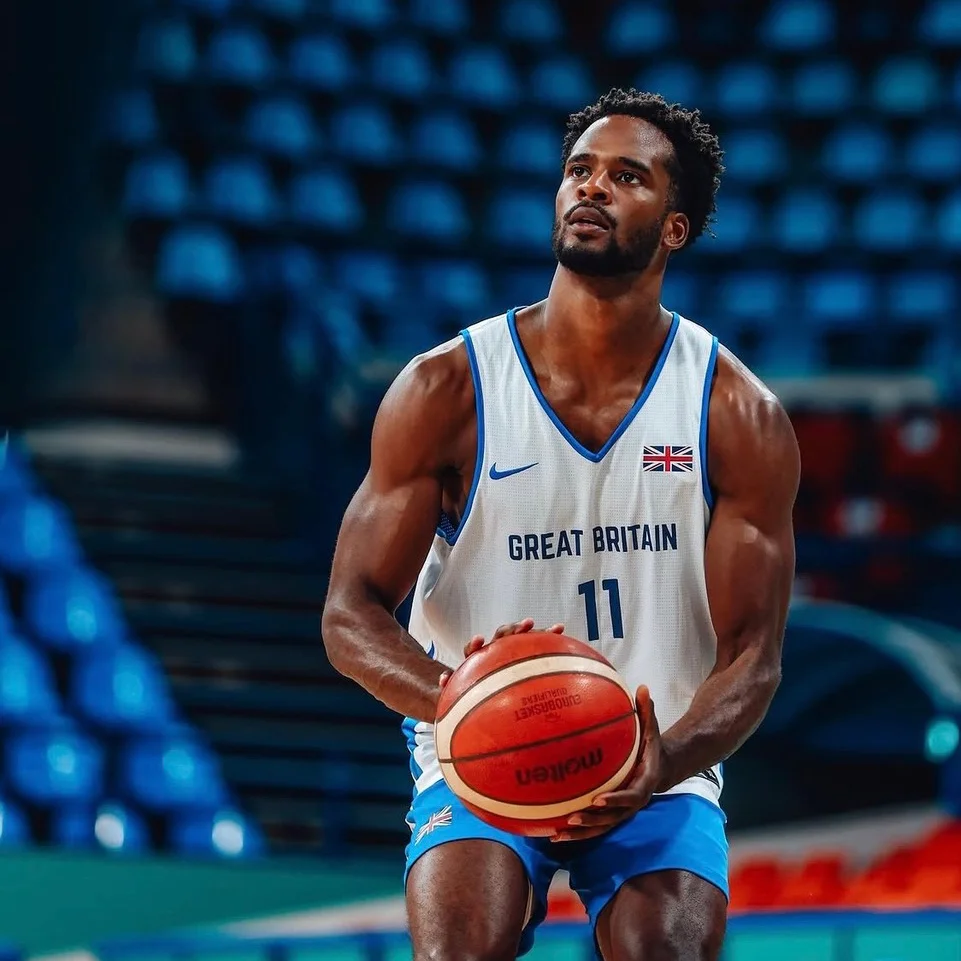
The Wisley’s Ron Commans and basketball coach Len Busch catch up with Josh Uduje six years after the first article.
Some of you may remember our upswing feature “future star in a dream car”. Back in 2020 we featured Josh Uduje. A young basketball player from South East London who not only had ambition to make it big in Basketball but also showed promise to have what it takes. We picked Josh up from his parents’ house in an Aston Martin Vantage and drove him to The Wisley where we had the chance to chat with Josh. It was a pleasure to finding out who Josh Uduje is, what dreams and ambitions he has.
Well, that was six years ago. A lot has happened since, and we are catching up with Josh again to find out what he has been up to in the last six years.
I say we, because I have drafted in Len Busch, a Wisley member and basketball coach to sit alongside me. With his keen interest and decades of basketball knowledge, Len is looking forward to getting to know Josh too.
Ron: Josh, thanks for taking the time to do this call. It has been a while since the “future star in a dream car” article. Ideally, we would have done this interview face to face again, but since you are in France, we have to make do with a video call. The idea of this feature has always been to introduce our young stars to our readers and then follow up a few years later to find out how things are going. Do you remember your visit to The Wisley?
Yes, of course. I had a great time in the Aston, and meeting some of The Wisley team. I remember having a nice lunch in the clubhouse and even hitting a few balls in the performance centre. It was so quiet, but then, it was during Covid times. I think people had a hard time getting their head around what they should and shouldn’t do at that time.
I also remember walking past Francesco Molinary on our way to the performance centre. I must admit I didn’t know him, I didn’t follow Golf, but I could just sense that he had something about him and the team told me later who he was.
Ron: If I remember correctly, at the time of that interview you had already started collage in the United States, is that right?
That’s right. I enjoyed New York. Culturally it was obviously different and being away from my family wasn’t always easy. The Basketball was great, although it was a huge step up. In the UK I was doing very well. I quickly progressed through the stages, being noticed for the right reasons. In the States the competition was much tougher.
Len: Josh, do you mind if I circle back a little, partly for my own benefit as this is the first time we meet?
Not at all Len.
Len: I understand that you have been involved with the national team here in the UK. How did that come about?
Yeah, I did. So, I began playing at London Thunder under 15s. And I had to work my way up to eventually starting games. And then the following year I played for GB under 16s.
Len: That’s incredible Josh, who was the GB coach?
James Vear.
He was actually the reason I got involved with the national team. In year ten I was supposed to partake in the regional camps. My London region coach was also my club coach. His name was Nestor Diaz. He cut me from the London region team, much to my disappointment of course. Two weeks later, I played against Barking Abbey for my school team, Whitgift.
My school team coach Clemens Crammer was super ambitious. He was keen to grow Basketball at Whitgift, which is predominantly a rugby and football school. The school comes with great credentials producing football stars like Jamal Musiala and Callum Hudson-Odoi.
Basketball was a low priority at Whitgift, but because of how passionate I was about the game, coach Krammer put us in an under 19s English school competition. That’s how we came to play against Barking Abbey. Unbeknown to me, the referee of the game was James Vear. I had a good game, shooting 35 or 40 points. James pulled me aside at the end of the game and was like, “who are you”? I told him, “I’m Josh Uduje, year 11”. James was asking me whether I was going to the regional camp? I said, no, I got cut. And he said, “no, no, that’s not OK. You’re coming to the England camp”.
That’s how I was able to skip the regional competition and go straight to train with the national team, playing for the under 16s.
Len: That’s impressive. Where did you play that camp?
We went to play in Bosnia. I had a good tournament, earning my place in the team.
Ron: And from there, did you go to America?
So, playing for the national team did get me noticed and I did get a couple of offers from American Colleges. But I didn’t feel ready. I stayed one more year in the UK. And then, at the end of that school year, probably around April time, I got invited to Basketball Without Borders, the European camp. I was 16/17 at the time, so I was playing up a year with GB Under 18s.
Len: Is that the team coached by Alan?
Alan Keane, yeah.
After that tournament I got invited to the NBA basketball camp in Atlanta. The camp offers a great opportunity for international players to show their talents. But it was at the UK Deng Camp top 50 that took place late summer in 2019 where I was ranked number 1 player in the UK, which was crazy. And then from there, I got contacted by a bunch of high schools interested in having me, and that was when I decided to go to the Knox School in New York, Saint James in Long Island, where I spent my first year.
Ron: You say that you moved on after a year in New York, where did you go from there?
I went to Arizona Compass Prep. Their basketball team was in the top three in the USA that year. Being part of such a successful team came with challenges for me though.
Len: That must have been a considerable step up again from New York.
Yeah, crazy step up. Five of my team mates back then are currently playing in the NBA. All nine seniors of that team went on to play Division One Basketball. At my previous school in New York, I was the only Division One prospect.
The step from the UK to New York was big, but I managed relatively quickly to prove myself as a leader in that team. Moving on to Arizona, where I was playing in one of the best teams in the United States was a whole different ballgame. I’m not going to lie, I struggled and I almost gave up. But before making that decision I asked for a meeting with my coach. We didn’t always see eye to eye, and I needed to try and clear the air. It turned out that his constant nagging and pushing was because he believed I had more to give. So, I decided to stay, managed to turn things around, and finished the year on a high. My team AZ Compass Prep won the Grind Session world title beating Paolo Banchero’s team (for those less familiar with basketball, he was the No1 draft in the NBA that season). I scored the winning basket in a tight game, 67 – 67. It was one of those movie moments where I shot a three-point winner literally as the clock counted down the last seconds of the game.
Ron: We will go and watch that clip – it sounds super exciting.
You talk about challenges on the court. I wanted to ask you about cultural differences – not about the transition from the UK to the US, but from coastal Carolina to Utah to San Jose, three very different places. And then when you throw in Arizona and Long Island, I mean, how would you compare and contrast those places, and did you have a favourite?
Well…, that’s a great question. I would say that they’re all so very different. Utah being the most different from anywhere that I lived before. Life there is really really slow. I think states like Utah, Oregon, Wyoming, are moving at a completely different pace. I lived in a city called Logan, which is about an hour and a half from Salt Lake.
The winter was super hard. I don’t like winter at the best of times, but people were great, super friendly. Unlike in a big city, people would recognise you, they would come up to you in the supermarket asking how things are going. I was immediately part of the community. But yeah, I preferred being down south in South Carolina, I loved being there. The weather was great. I lived near Myrtle Beach. So, anytime from February onwards, we would just take a 20-minute drive, and we’d be at the beach.
Ron: That’s big golf country. Myrtle Beach. Did you notice golfers in and around the place?
Yeah, so there was a golf course right next to our coastal campus. And our head coach, Cliff Ellis, He would get us involved in an annual golf tournament there which was again a cool experience.
Len: Coming back to basketball, I saw you played with the National Team in the 2026 winter camp.
How did you find that experience?
Yeah, the national team experience was great. I think I benefitted from spending the EuroBasket pre-camp with them the previous summer. It gave me a bit of a head start on and off the court. I knew they guys and could jump straight into the winter camp. Of course, I wish I could have played more, but I do realise that I am new to the team and must earn my stripes first as it were.
Len: It does take time to bed into a national team, and their camps are pretty short.
Yeah, super short. But it was a great experience to be with the best British players, and you get a break from your team too. Playing in France now, it’s nice to be around your countrymen. And yeah, I’m really looking forward to my future with GB. I think my age group, the 2002, 2003-year group are very talented. So, I’m fortunate to be one of the first to break into the senior men’s team. I’m looking forward to seeing my peers come through in the next couple years. I think that will be very exciting.
Len: That sounds great. Well, we should talk about the French League. You won your last game right? Ron and I were watching your highlights.
We did, yeah. The French League is strong. It’s probably one of the most athletic leagues in Europe. Luckily playing six years in America has given me a bit of an advantage. American basketball players are top athletes. Playing and training in that system has helped with my own physical development which meant that the transition to the French league was seamless. I’m probably one of the most athletic players in the league. In December I won the leagues dunk contest, which was cool. Although there is some adjustment in terms of playing style. I’m now getting the feel for the European style of play.
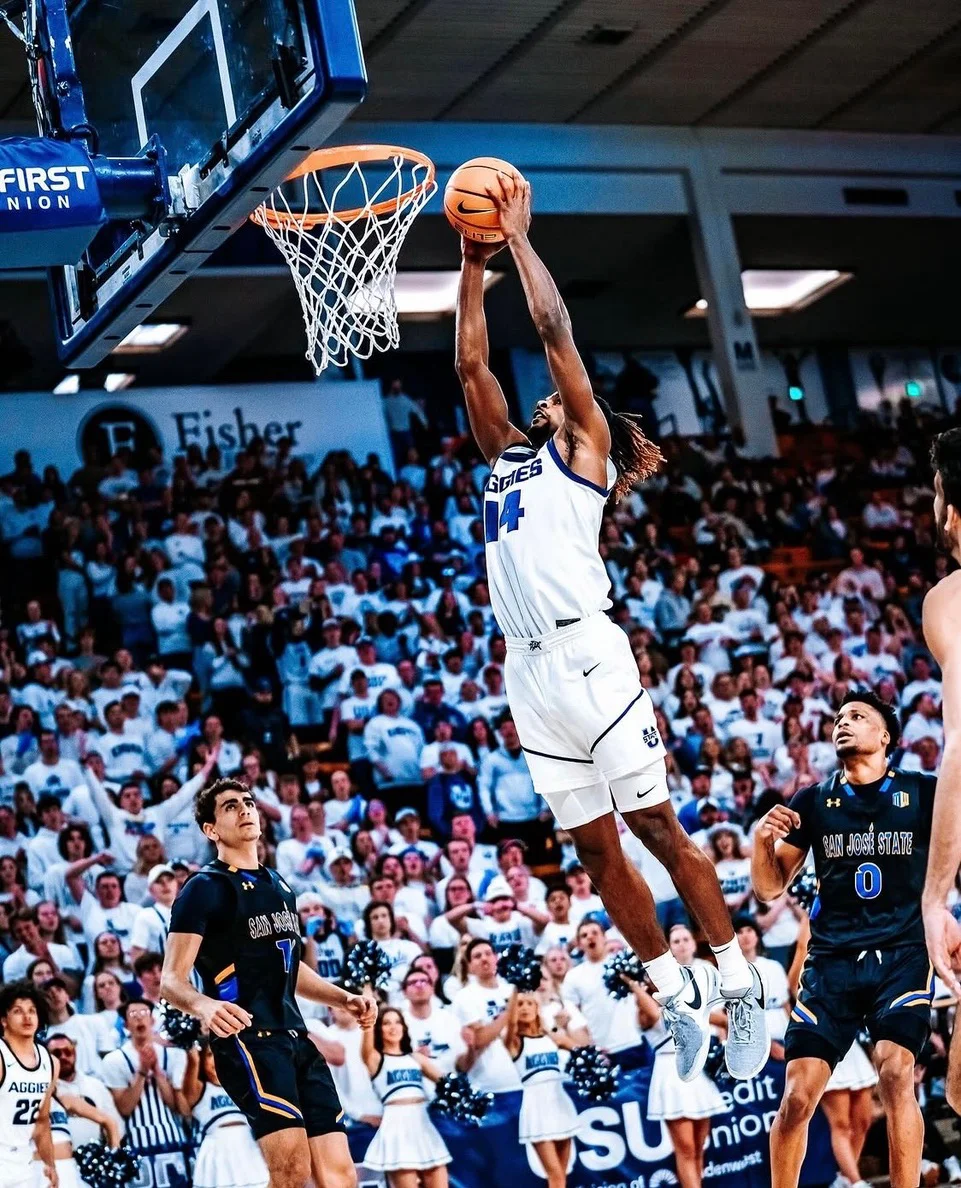
Ron: You say the style of play is different and takes some adjusting. The language is different too. How’s your French?
So so…
Ron: Are you trying?
Yeah, I am. I can communicate in the grocery store and order a meal in a restaurant. “Poulet et riz s’il vous plait” – that kind of thing. But I’m starting lessons soon, as I want to have proper conversations in French. It just helps with community engagements, communicating with fans and the media. I feel while being in France I want to make a proper effort to learn the language.
Len: That’s good. I used to take teams to France 20 years ago to play in French competitions back in the days when the league here wasn’t strong enough. I’d always try and speak French much to my players amusement.
That’s the thing, I think a big part of it is having the confidence to try. A lot of people aren’t confident enough and worry they get it wrong. I’m okay with making mistakes, at least I give it a go.
Len: And that attitude will serve you well too.
Yeah, you need a lot of resilience. I’ve made plenty of mistakes and certainly learned a lot. No matter how talented someone is, there will come times when things don’t just happen. I mentioned how easy it was for me in the UK. I progressed very quickly to very good standard. When I moved to America, the standard was so much higher, and everyone was used to playing at that level. I had to work hard to get noticed. I was also an unknown quantity. Many of my fellow players had been noticed at junior level and a couple of my teammates went “one and done”. They got drafted to the NBA in their first year of college. I ended up playing all four years of college basketball. So, understanding that there are different pathways to achieving your goals was an important learning for me. I ended up going to three different schools. Not necessarily because I was forced to, but because things just happened. My first coach retired for example. We had a great season with my second coach. So much so that he got bought out of his contract and ended up coaching at the University of Washington. So, I decided to play my last year of basketball in America for my old high school coach, who I felt I learned so much from. And that’s where I ended up concluding my college career. Despite the ups and downs and the disappointment of not making the NBA draft, I’m grateful for my journey.
Len: You are playing professional basketball in a good European league. That’s a great achievement. Where do you see yourself on your career path? Have you achieved 30%, 50%, 80% of what you want to achieve in Basketball?
I would say in terms of reaching my goals and aspirations, probably about 20%.
Len: Wow, okay.
I think the first 10% was playing in the American Division One. Being an impact player at Division One level, and then the other 10% is making it as a professional. But, ultimately my goal is to play in the NBA. I haven’t given up on that dream and I’ve got a plan in place.
Len: Wow, good for you. So, you’re working hard.
The immediate goal is obviously to be successful in Europe in the next couple of years, but then, I’m planning to hopefully take my talents back to America and play in the NBA.
Ron: Fantastic. Well, we wish you a lot of luck with that.
Thank you.
Len: So, you’ve got a lot going on to keep you in peak condition physically, mentally and technically.
Yeah, I’ve been fortunate to have a good group of people supporting me, people who’ve kind of guided me in the right direction. And last summer when I played in the summer league with the San Antonio Spurs, I had that moment when I realised that I’m capable. I think we all have these moments in life, in our careers, and in sport if you want to perform at the highest level, the belief that you belong is crucial. I realised then that I am capable of performing at this level.
It is now only a matter of time and consistency in my performance and attitude.
Len: Spurs, they had some of their first team NBA players there, did they?
Yeah, so one of my good friends, Jeremy Sohan, was playing with the Spurs that summer.
He’s now with the Knicks. I got to see Wemby (Victor Wembanyama) too. We practised in the Spurs facility. So, all of the Spurs players would come in and out of the facility as we were practicing. I got to see Gregg Popovich and Tim Duncan all these players would be going about their business, which was super weird, but… a great experience, for sure.
Len: Wow. What an experience. All being well, in a few years that will be you.
Yes, thank you. Hopefully.
Ron: Before we wrap this chat up Josh, is there anything we didn’t ask you that you wish we had?
That’s a good question. I think you covered most to be fair. Maybe just a note on Basketball in the UK. I’m just a kid from South East London. I enjoyed Basketball, but it took some time for me to see a pathway into the professional game. Culturally we are so focused on Football, Rugby and maybe Cricket – Basketball doesn’t feature. I was lucky to find my path, but more visibility for Basketball is something I would like to happen in the future.
Now that I’m fortunate to have gone through the whole journey, studying in America and making it professional. It’s a story I’m happy to share with kids just like me a few years ago. Like you said Len, you coach in England and there aren’t many role models here for the next generation to see themselves in. So, I’m trying my best to bridge that gap. An interview like this is an opportunity to tell my story. And who knows, if it sparks a bit of interest in basketball then that’s a good thing, right.
Len: Well, one day, maybe when you’re back, I could arrange to bring you into my high school to talk to the kids there.
Of course, definitely. That’s something I frequently do. I have been back to Whitgift a few times to talk to the kids. Last year I held a basketball camp there too.

Len: We will have to arrange that when you are back home for a few days Josh. I’m looking forward to that.
Ron: Well, thank you for taking the time to talk to us again Josh. It’s great to hear what happened since the last interview and congratulations again for making it pro. I’m sure we will talk again in a couple of years and hear how your plans are playing out. We wish you all the very best!
Thank you. NBA all the way.
Nice talking to you both and I’ll let you know when I’m in London next. Hopefully we can do the next chat at The Wisley. I could do with a few tips to improve my golf.
Interview by Ron Commans and Len Busch

Ron Commans is an American who has called Surrey home for more than 35 years and currently serves as a PGA professional at The Wisley Golf Club. A former tournament player, he competed on both the PGA Tour and the European Tour.
Len Busch is and American born UK basketball coach and avid golfer. Four time women’s pro coach of the year with 8 domestic championships. Len and his wife and three daughters have lived in the UK for 28 years.